

The preserved home, garden, and light-filled studio of Spanish Impressionist Joaquín Sorolla, one of Madrid's most charming and least crowded museums.
Start in the garden
Most visitors treat the garden as the thing you cross to reach the paintings. It is the other way round. Joaquín Sorolla commissioned this house on Paseo del General Martínez Campos in 1910, at the height of his international fame, working with the architect Enrique María de Repullés y Vargas, and the brief had two halves: a studio with reliable north light, and a private garden he could paint without leaving home.
There are three connected courtyards, laid out as a deliberate homage to Andalusian and Moorish design — fountains, tiled benches and citrus trees arranged after the gardens of the Alhambra, which Sorolla had painted repeatedly on trips to Granada and Seville. Seeing them after looking at his garden canvases inside, or before, is the whole experience of this museum in one move. They are also the best photographs on the property: the tiled fountains framed against the house’s arched windows, in late morning, when direct sun finally clears the surrounding buildings and drops into the courtyard.
In spring the planting matches the light he painted. In summer the shade and the fountains make this a legitimately cooling stop in Chamberí. In winter the garden is bare, and the house still works.
The studio the house was built around
Inside, the studio is preserved as Sorolla’s family left it after his death in 1923 — easels, palettes and a rotating hang of his paintings, under the same north-facing windows that dictated the building’s orientation. The north light produces a soft, even glow that flatters photographs of the room itself.
Sorolla was by the early 1900s among the most commercially successful painters alive, known for luminous Valencian beach scenes, portraits of Spanish high society, and a handling of sunlight that drew comparisons to the French Impressionists although he arrived at it largely on his own. The domestic rooms around the studio hold the family’s own furniture and decorative art, an unstaged view of upper-middle-class Madrid life in the early 20th century, and they are worth as much attention as the canvases. His widow, Clotilde García del Castillo, left the house and its contents to the Spanish state after her death in 1929 on the explicit condition that it be kept as the family had lived in it. That condition is why the place reads as a visit rather than a gallery.
The rooms people miss are the small side collection of preparatory sketches and beach studies, passed over on the way to the main studio. Those looser, faster works show his technique far more plainly than the finished portraits do.
Photography without flash is generally fine, though a few light-sensitive rooms restrict it and post signs saying so. There is no significant cloakroom or shop, so travel light. Accessibility is partial — the historic house has level changes between rooms, though the core galleries and the garden are reachable; check ahead if a full step-free route is essential.
An hour, €3, and no queue
An hour to ninety minutes covers it properly. This is a small museum and inflating the visit does it no favours; it works best as an add-on to a day in Chamberí or Salamanca rather than as a headline destination.
Admission is €3, with a reduced rate for under-18s, students, over-65s and large families. It is free on Saturdays from 14:00 to 20:00 and all day Sunday from 10:00 to 15:00, and on April 18, May 18, October 12 and December 6. Opening hours are Tuesday to Saturday 09:30-20:00 and Sunday 10:00-15:00; it closes on Mondays and on January 1, January 6, May 1, November 9, and December 24, 25 and 31.
Crowds are barely a factor. Any weekday is quiet, Saturday afternoons pick up slightly once free entry starts at 14:00, and Sunday mornings are the busiest — which here still means you can stand in front of a painting alone. Weekday mornings just after opening are the calmest. Getting here takes about 25 minutes on foot from Puerta del Sol, or five from Gregorio Marañón on Lines 7 and 10; Iglesia on Line 1 and Rubén Darío on Line 5 are both 10-12 minutes away. The metro is the sensible option unless you want the walk.
Families do well here. The scale is forgiving, and the garden holds younger children who have run out of patience for the Prado or the Reina Sofía.
Ponzano, and the rest of the walk
The Museo Lázaro Galdiano is 15-20 minutes east into Salamanca and pairs naturally as the other kind of house-museum — built around a private patron rather than a working artist. Plaza de Colón and the National Archaeological Museum sit a similar distance away and combine into one unhurried loop through northern Madrid if you have the afternoon.
For food, walk ten minutes into Chamberí to Calle Ponzano, one of Madrid’s best tapas-crawl streets and a considerably more local scene than anything within reach of the Golden Triangle.
Crowd Meter
- Low — Any weekday
- Medium — Saturday afternoons after 14:00 (free entry begins)
- Peak — Sunday mornings, though even 'peak' here is mild compared to the Golden Triangle museums


Where to Stay Near Sorolla Museum
Real current prices via Agoda. Dates shown are indicative — pick your own on the next step.
Sorolla Museum: Quick Answers
What are the opening hours of Sorolla Museum?
Tue-Sat 09:30-20:00; Sun 10:00-15:00. Closed Mondays and Jan 1, Jan 6, May 1, Nov 9, Dec 24, 25 and 31
How much does it cost to visit Sorolla Museum?
€3 general admission; reduced rate for under-18s, students, over-65s, and large families. Free Saturdays 14:00-20:00 and all day Sunday 10:00-15:00; also free on April 18, May 18, October 12, and December 6
How do you get to Sorolla Museum?
Gregorio Marañón (Lines 7 and 10), about 5-minute walk; Iglesia (Line 1) or Rubén Darío (Line 5), about 10-12 minutes on foot. 25-minute walk from Puerta del Sol; faster by metro
How long should you plan to spend at Sorolla Museum?
1-1.5 hours
Is Sorolla Museum good for kids?
A relaxed, small-scale museum that works well for kids who need a break from bigger institutions — the garden alone is worth the visit for younger children
Is Sorolla Museum wheelchair accessible?
Partial accessibility; the historic house has some level changes between rooms, though core galleries and the garden are reachable — check ahead for full wheelchair routes
Any tips for visiting on a budget?
At €3 full price and free most weekends, this is one of the best-value stops in Madrid regardless of the free windows
Where to Go Next

Museo Lázaro Galdiano
A publisher's private art collection of some 12,600 pieces, from Bosch and Goya to English portraiture, housed in his own Salamanca-district palace.
 iconic
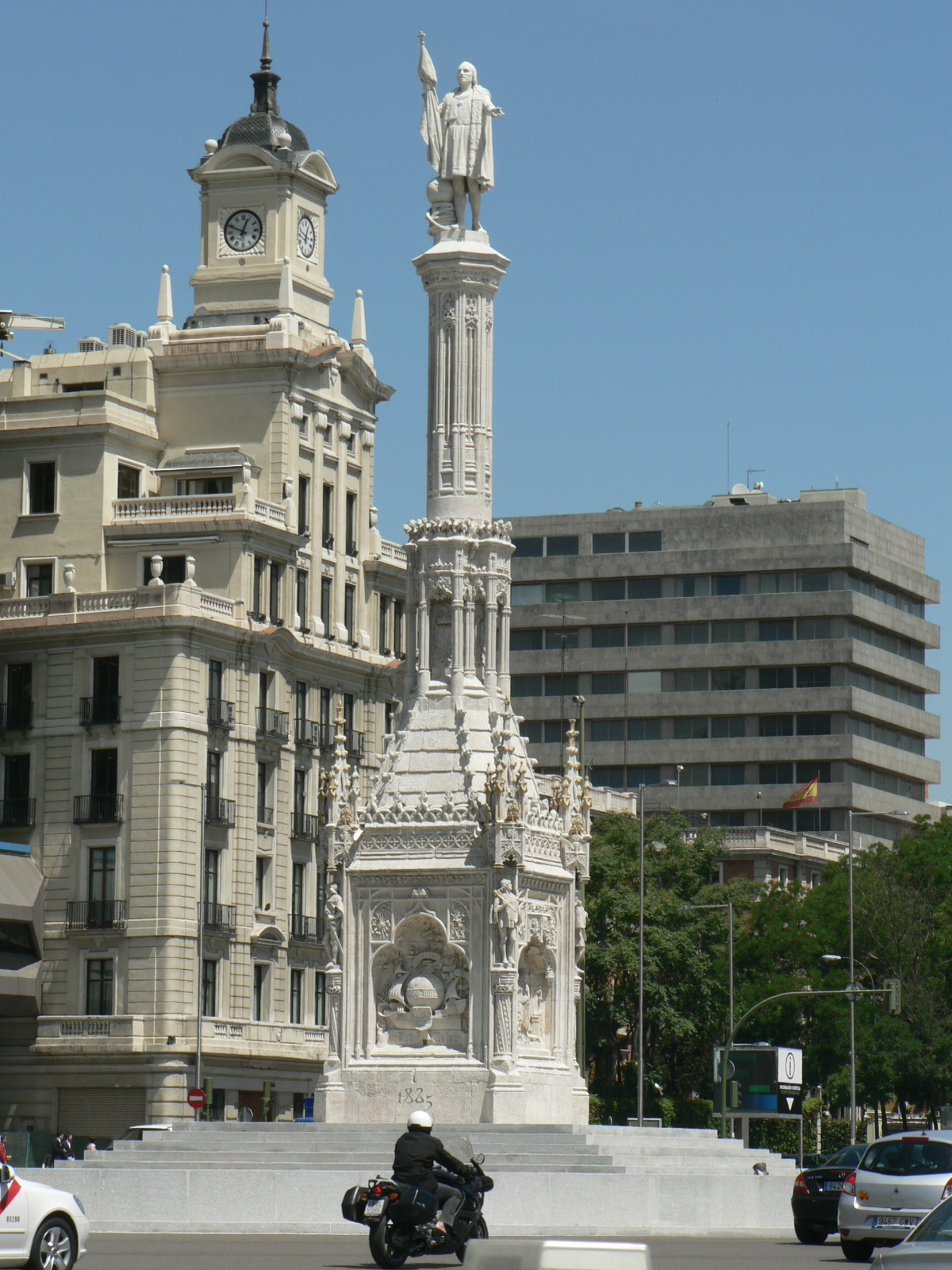
Plaza de Colón
A grand square anchored by a towering Neo-Gothic monument to Christopher Columbus and one of the world's largest Spanish flags flying overhead.

National Archaeological Museum (MAN)
Spain's vast archaeology collection, from Iberian sculpture to Islamic and medieval Christian artifacts, housed beside Plaza de Colón and largely bypassed by tourists.