

A publisher's private art collection of some 12,600 pieces, from Bosch and Goya to English portraiture, housed in his own Salamanca-district palace.
Two kilometres too far north, and what that has cost it
Every guide to Madrid’s art has the same shape: three museums on one boulevard, walkable in an afternoon, and everything else is optional. The Museo Lázaro Galdiano is everything else. It sits at Calle de Serrano 122, well up in Salamanca, a thirty-minute walk from Puerta del Sol and nowhere near the Prado or the Thyssen-Bornemisza. No amount of quality has ever overcome that.
The result is a museum holding roughly 12,600 objects — including genuine paintings by Hieronymus Bosch, Francisco Goya and El Greco — where the crowd meter never really moves. Weekdays are quiet, mornings emptier still, and even the daily free hour produces nothing worse than a mild uptick. It remains one of Madrid’s least-visited major collections relative to what is in it, and that is a straightforward consequence of geography rather than of anything about the art.
So the honest framing is this: nobody wanders in. You go deliberately, by metro, having decided that a Bosch without a queue in front of it is worth the trip north.
A publisher’s fortune, spent across four decades
José Lázaro Galdiano made his money in print. He founded La España Moderna, an influential magazine, and spent the following decades converting the proceeds into one of Spain’s most significant private collections — painting, sculpture, jewellery, arms, enamels, metalwork, whatever caught an omnivorous and unusually well-informed eye.
In 1908 he completed Parque Florido, the palace built to hold both his family and the collection. It was designed around display as much as around living: the interiors were laid out to show things, including the pasarela de los músicos, an elevated interior walkway that has no real equivalent in another Madrid house-museum. When he died in 1947 he left the lot to the Spanish state — palace, collection and a personal library of 20,000 volumes — explicitly so that a lifetime of acquisition would stay public.
Madrid has more than one museum of this type, and it is worth knowing which is which before you commit an afternoon. The Museo Cerralbo preserves an aristocrat’s rooms exactly as he left them, atmosphere first. The Sorolla Museum is one painter’s house and studio. Lázaro Galdiano is the encyclopaedic one — closer in ambition to the Thyssen, on a smaller scale and with a far lower profile.
The four names that would headline anywhere else
Bosch, Goya, El Greco, and a run of English portraiture connected to Constable and Reynolds. At almost any other institution each of those would anchor a room and appear on the banners outside. Here they are distributed through a dense, encyclopaedic hang across several floors, and it is entirely possible to walk past one while looking for the next.
The Goya holdings are the strongest single cluster and the reason most art-minded visitors make the journey: paintings and etchings that sit outside the Prado’s collection and get a fraction of the attention. The English portraits are the genuine surprise — an unexpected strength for a Spanish private collection, and rooms that most visitors move through at speed on their way to something with a more familiar label.
El Salvador joven, and the difficulty of a Leonardo among thousands
The collection’s most quietly extraordinary object is a small panel painting, El Salvador joven, attributed to the circle of Leonardo da Vinci. At a bigger museum it would have its own wall, its own lighting and a rope in front of it. Here it is one remarkable thing among many, hung at a scale that assumes you already know what you are looking at.
This is the central pleasure and the central difficulty of the place. Nothing is staged for you. The density that makes the collection feel like a real person’s obsession is the same density that makes it easy to miss the best object in the building. Go slowly, and read the labels in the rooms you would normally skim.
The jewellery rooms, which the paintings overshadow
Lázaro Galdiano assembled one of the most important collections of jewellery, enamels and decorative metalwork in Spain, and it is consistently underplayed because the paintings have the famous names attached. Arms, armour, ivories and personal ornament fill several rooms. If your interest runs to objects rather than canvases, this is where the collection is least rivalled anywhere in the city, and it is the part of the visit that most rewards the second hour.
Budget an hour and a half to two hours overall. The density of the display punishes a fast pass; there is no route that gets you the highlights in forty minutes, because the building was not arranged to produce highlights.
The afternoon session only runs Tuesday to Friday
The schedule is the single most common way to waste a trip up here. The museum opens Tuesday to Friday from 09:30 to 15:00 and again from 16:30 to 19:30, but at weekends it runs the morning session only, 09:30 to 15:00. It closes Mondays and holidays. Arrive at four o’clock on a Saturday and you will find the doors shut.
Admission is €8 general and €5 reduced, the latter covering over-65s, students, children aged 7 to 10 with an adult, visitors with a disability and large families. Entry is free Tuesday to Friday from 14:00 to 15:00 — the last hour of the morning session, so arrive by about 13:45 rather than drifting in at ten to three. Under-7s accompanied by an adult go free at any time.
Photography without flash is generally permitted in most galleries, with exceptions around light-sensitive works — watch for signage. Accessibility is partial: the palace has level changes, and it is worth contacting ahead if step-free access is essential. The collection’s density and the absence of anything interactive make it better suited to older children and adults than to young kids.
Pairing it with the Archaeological Museum, not with the Prado
Do not try to bolt this onto a Golden Triangle day; the walk defeats it and you will arrive tired. Build the afternoon around Salamanca instead. The nearest stations are Rubén Darío (Line 5) and Núñez de Balboa (Lines 5 and 9), both about ten minutes’ walk, with Gregorio Marañón (Lines 7 and 10) also within reach — see getting around Madrid if you are working out passes.
From the door, the National Archaeological Museum is roughly fifteen minutes down Calle Serrano and makes the natural second stop: another serious, under-visited collection in the same district, and a completely different kind of looking. Continue south and you reach Plaza de Colón, which is the useful hinge point back towards the centre.
For food, Serrano and the streets around it run to upscale cafés and pastry shops. If you would rather eat well than expensively, Mercado de la Paz is the better call, a short walk south and considerably more interesting than the boulevard’s coffee prices suggest. In summer, the palace is also one of the coolest and quietest indoor hours available anywhere in Salamanca.
Crowd Meter
- Low — Any weekday, especially mornings
- Medium — The daily free-entry window
- Peak — Rarely crowded; this remains one of Madrid's least-visited major collections relative to its quality


Where to Stay Near Museo Lázaro Galdiano
Real current prices via Agoda. Dates shown are indicative — pick your own on the next step.
Museo Lázaro Galdiano: Quick Answers
What are the opening hours of Museo Lázaro Galdiano?
Tue-Fri 09:30-15:00 and 16:30-19:30; Sat-Sun 09:30-15:00. Closed Mondays and holidays
How much does it cost to visit Museo Lázaro Galdiano?
€8 general admission; €5 reduced for over-65s, students, ages 7-10, visitors with a disability and large families. Free Tuesday to Friday 14:00-15:00, the last hour of the morning session; also free for under-7s with an adult
How do you get to Museo Lázaro Galdiano?
Rubén Darío (Line 5) or Núñez de Balboa (Lines 5 and 9), both about 10-minute walk; Gregorio Marañón (Lines 7 and 10) also within reach. 30-minute walk from Puerta del Sol; faster by metro
How long should you plan to spend at Museo Lázaro Galdiano?
1.5-2 hours
Is Museo Lázaro Galdiano good for kids?
Better suited to older kids and adults with an interest in art history — the dense, encyclopedic hang of 12,600 objects can overwhelm younger children
Is Museo Lázaro Galdiano wheelchair accessible?
Partial accessibility; the historic palace has some level changes — contact ahead for current provisions
Any tips for visiting on a budget?
The free hour runs Tuesday to Friday 14:00-15:00 — arrive by 13:45, since it is the last hour before the museum closes for the afternoon break
Where to Go Next

National Archaeological Museum (MAN)
Spain's vast archaeology collection, from Iberian sculpture to Islamic and medieval Christian artifacts, housed beside Plaza de Colón and largely bypassed by tourists.
 iconic
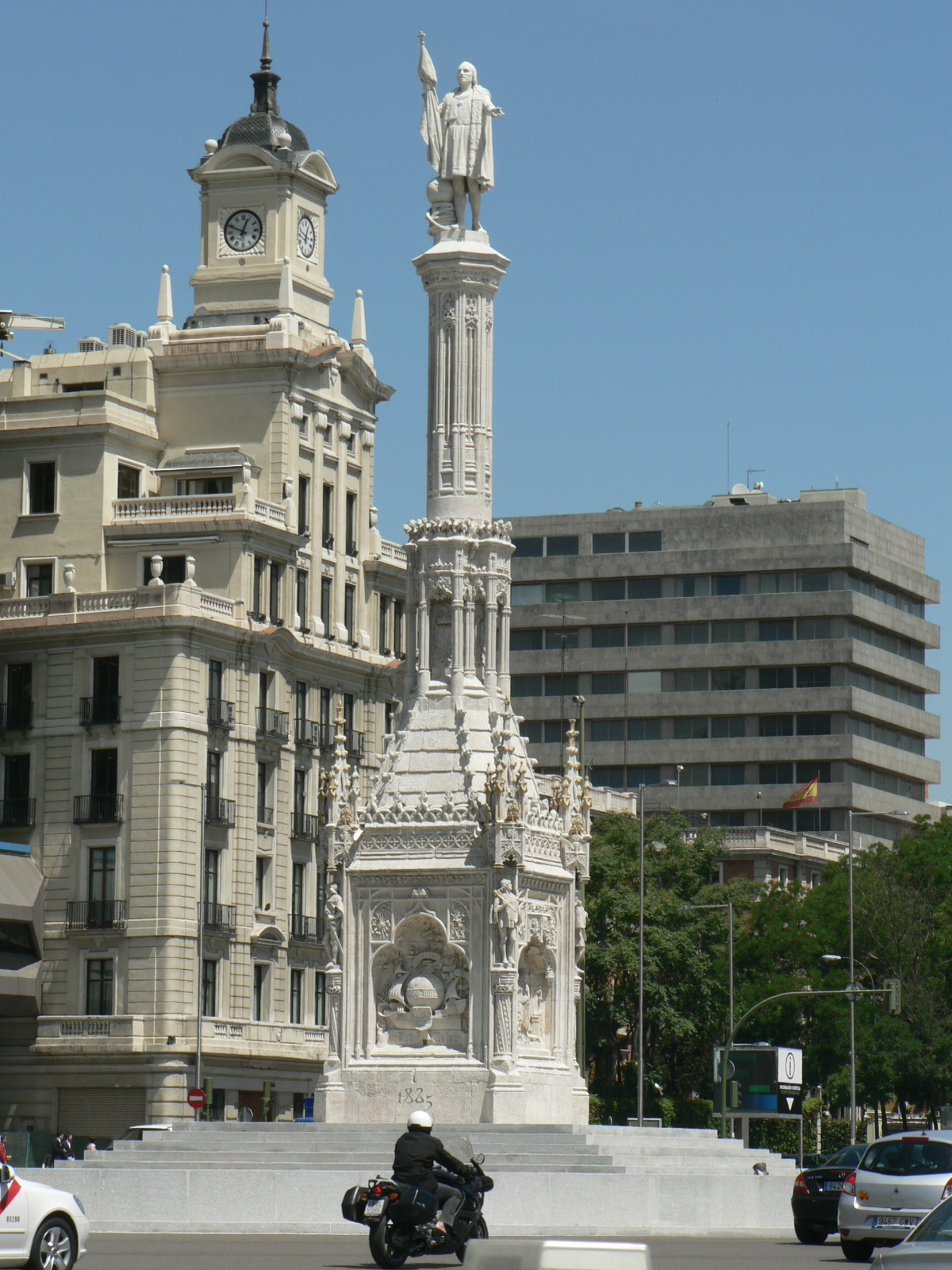
Plaza de Colón
A grand square anchored by a towering Neo-Gothic monument to Christopher Columbus and one of the world's largest Spanish flags flying overhead.