

Real Madrid's iconic home ground, now topped with a retractable roof and giant screen after a €1 billion renovation, with tours through the trophy-filled museum and pitchside tunnel.
Tour day or matchday?
Almost every decision about visiting the Santiago Bernabéu follows from which of two entirely separate experiences you are after. One is the stadium tour: a self-guided route through the trophy museum, down to pitch level, through the players’ tunnel and into both dressing rooms, running Monday to Saturday 9:30 AM–7 PM and Sunday and holidays 10 AM–6:30 PM, with last entry 90 minutes before closing. The other is a Real Madrid match, which fills all 80,000-odd seats, turns the 360-degree interior screen on, and makes the building do the thing it was rebuilt to do.
The two do not combine easily. On match days the tour route is cut back or suspended entirely, particularly in the hours before kickoff, and tour hours shift without much notice. If you want both, buy the match ticket first, then book the tour for a different day — ideally a weekday morning right at opening, which is the quietest window on the crowd calendar. Weekday afternoons are busier; weekends and pre-kickoff hours are the peak.
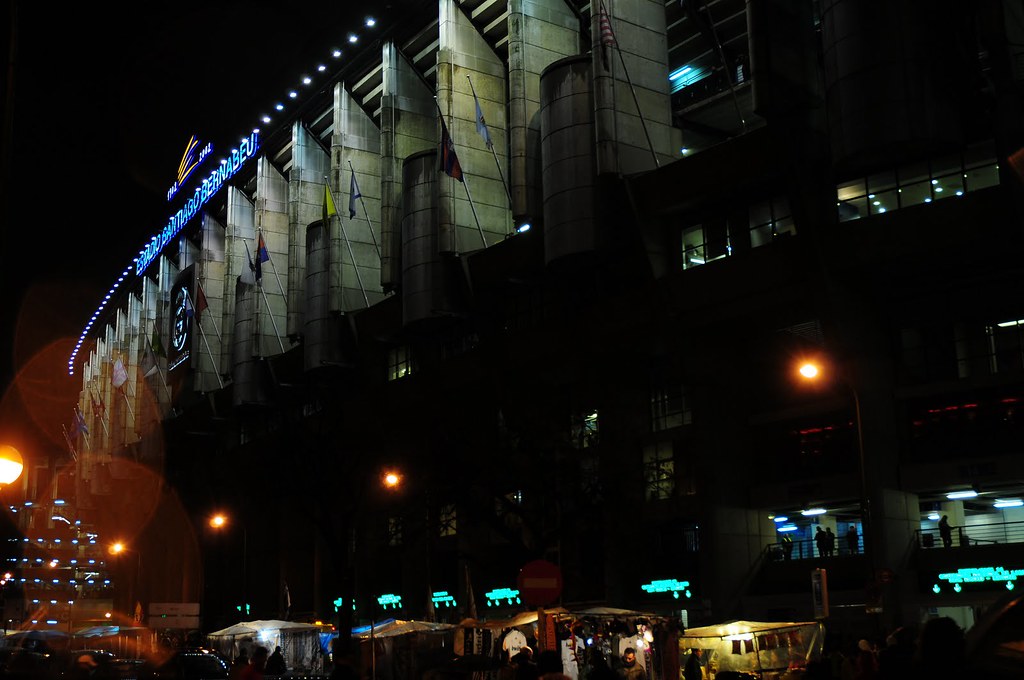
If football means nothing to you, the tour still works as architecture. The roughly €1 billion renovation produced a retractable roof, a perforated steel facade that can be used as a full-building video surface, and an interior screen wrapping the entire bowl — a scale of engineering ambition that reads clearly even to someone who could not name a single player.
The tour route, stop by stop
The self-guided route takes 1.5 to 2.5 hours if you read the displays rather than walk past them, and it moves roughly in this order:
- The trophy museum, which holds Real Madrid’s championship record including its unmatched run of European Cup and Champions League trophies. Most visitors accelerate through the earlier 20th-century material — the photographs, old kits and pre-1960s trophies — heading for the pitch. That older section is where the length of the club’s dominance actually becomes legible.
- The upper seating tiers, where the route opens onto a panorama across the full bowl and the underside of the retractable roof.
- Pitch level and the players’ tunnel, walking the same path from dressing room to grass that the squad uses on match night.
- Both dressing rooms, home and away, included on the standard ticket.
Parts of the route cross open sections of the seating bowl, which matters in July and August: bring water and sun cover. In winter the opposite is true — most of the experience is under the roof or indoors in the museum, making this one of Madrid’s more weatherproof half-days when the wind comes off the Sierra. Photography is welcome along the whole route, with restrictions generally limited to flash and tripods at specific trophy cases.
Standard ticket, premium, or Skywalk
Standard self-guided tour tickets run roughly €25–30 booked online, and that ticket already covers the museum, the pitch-level view and the dressing rooms — the substance of the visit. Premium and skywalk experiences range from about €45 to €120 depending on package, adding skip-the-line entry, the rooftop Skywalk and VIP areas. The premium tiers are worth the gap for committed fans who want the deepest access; for everyone else the standard ticket is not a compromised version of the tour, just the tour.
Book online rather than at the box office. It is consistently cheaper, and it locks in an entry window, which has become the difference between walking in and standing in line since the renovation reopened progressively across 2023 and 2024. The venue is fully accessible after the rebuild, with elevators covering the tour route rather than stairs, and the museum’s interactive exhibits hold children’s attention well past the usual museum threshold.
Eight decades under the current shell
The original Estadio Santiago Bernabéu opened in December 1947, named for Santiago Bernabéu Yeste, the club president whose fundraising built it during a hard postwar period. It expanded repeatedly as the club’s success grew, hosting the 1982 FIFA World Cup final and multiple European Cup and Champions League finals along the way. The recent renovation, one of the most expensive stadium projects in the history of sport, did not replace that history so much as wrap it — the museum inside is the club’s own account of why the building matters.
Madrid’s other top-flight ground, the Riyadh Air Metropolitano out east, offers a useful contrast: Atlético’s home is newer, less freighted with mythology, and a much easier ticket to get on short notice if your dates do not line up with a Real Madrid fixture.
Getting there, and treating it as its own half-day
The stadium sits directly on the Santiago Bernabéu metro stop (L10), up the northern stretch of Paseo de la Castellana and well outside the historic center. Nuevos Ministerios (L6, L8, L10 and Cercanías), a short walk south, is the more useful interchange for getting back toward Plaza de Cibeles and Gran Vía; the getting around Madrid guide covers ticket options if you are buying for the week.
Do not try to fold the Bernabéu into a central walking day — the distances defeat it. Treat it as a self-contained half-day, then ride back into the center for dinner. If you want something else in the northern half of the city on the same trip, the Sorolla Museum in Chamberí is a short metro hop and about as far from a football stadium in mood as Madrid gets. Around the ground itself, the football-themed bars and casual restaurants along Paseo de la Castellana are the standard stop for a caña and a pincho before or after; longer trip plans that account for the travel time are sketched in the Madrid itineraries.
Crowd Meter
- Low — Weekday mornings, non-match days
- Medium — Weekday afternoons
- Peak — Weekends and the hours immediately before kickoff on match days, when general tour access is also restricted


Santiago Bernabéu Stadium: Quick Answers
What are the opening hours of Santiago Bernabéu Stadium?
Monday-Saturday 9:30 AM-7 PM, Sunday/holidays 10 AM-6:30 PM; last entry 90 minutes before closing; tour hours shift on match days
How much does it cost to visit Santiago Bernabéu Stadium?
Standard tour tickets from roughly €25-30 online; premium/skywalk experiences run €45-120 depending on the package
How do you get to Santiago Bernabéu Stadium?
Santiago Bernabéu (L10); Nuevos Ministerios (L6, L8, L10, Cercanías) is a short walk south. Directly on the Santiago Bernabéu metro stop
How long should you plan to spend at Santiago Bernabéu Stadium?
1.5-2.5 hours for the full stadium tour and museum
Is Santiago Bernabéu Stadium good for kids?
Very good — the museum and pitch-view stops are engineered for fans of all ages, including interactive exhibits
Is Santiago Bernabéu Stadium wheelchair accessible?
Fully modern, wheelchair-accessible facility following the recent renovation, with elevators throughout the tour route
Any tips for visiting on a budget?
The standard self-guided tour is significantly cheaper than premium add-on packages and covers the museum, pitch view, and dressing rooms