
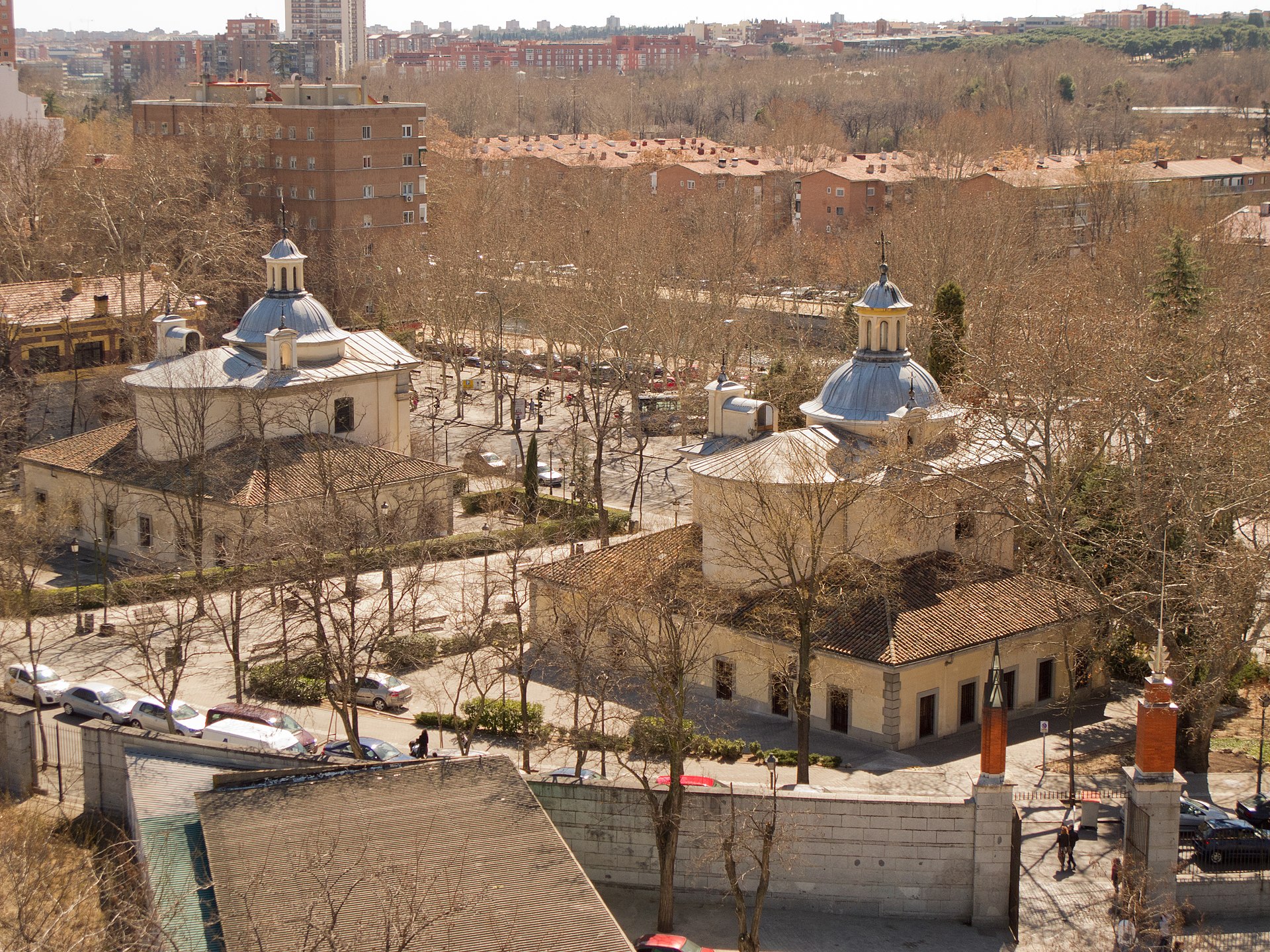
A small neoclassical chapel with a ceiling fully frescoed by Francisco Goya in 1798, who is also buried here — free to visit and largely overlooked by tourists.
One room, one ceiling, 1798
The Ermita de San Antonio de la Florida is a small neoclassical chapel on the western edge of Madrid, and the entire reason to go is above your head. Charles IV had it built in the 1790s; in 1798 Francisco Goya, by then an established court painter, frescoed the dome and pendentives, working fast and covering the whole of the cupola. It is a complete, unified fresco cycle by one of the most important painters in European art, in a single room you can cross in a few paces.
Nothing else in the building competes, and nothing needs to. The plain neoclassical exterior gives no indication of what is inside — deliberately so — and the visit is over in half an hour. Thirty to forty-five minutes is the honest figure, and most of that is spent standing still with your neck tilted back.
The people Goya put on a church dome
The scene is a miracle attributed to Saint Anthony of Padua: the saint raising a murdered man so he can testify to his father’s innocence. What makes it matter is not the subject but the audience Goya assembled around it. Instead of ranks of idealised saints and angels, the cupola is crowded with contemporary Madrid — majas, labourers, onlookers, ordinary and unflattering faces, painted with exactly the unsentimental attention he gave the aristocracy in his portraits.
For religious ceiling painting in 1798 this was close to insubordinate, and it points directly forward to the Black Paintings now hanging in the Prado. If you have already seen his court portraits and his late work there, this is the piece that connects the two, and it is free.
The smaller painted sections around the main dome repay a slow look once you have finished with the cupola. Stand directly beneath the centre first; the composition was designed to be read from that spot.
Buried under his own fresco, without his head
Goya died in exile in Bordeaux in 1828. His remains were repatriated to Spain and interred here in 1919, set into the floor beneath the presbytery — so the painter lies under the ceiling he painted 121 years earlier, which is a combination no other building in Madrid can offer.
There is a documented oddity attached. When the grave in Bordeaux was opened, the skull was not with the body, and it has never been recovered; what was brought to Madrid and reburied here was headless. The various explanations that circulate are not settled fact, and the tomb slab says nothing about it. It is a genuinely strange footnote to stand over.
There are two identical chapels, and only one has the Goya
The single most common confusion here is architectural. Next door stands a near-identical twin, built later so that the parish could carry on holding services without wear, candle smoke and use degrading the frescoes. The original was then kept purely as a museum. Most visitors do not register that there are two nearly matching buildings side by side; make sure you walk into the one holding the frescoes rather than the working church beside it.
Free, no cameras, and Saturday at 11:00
Entry is free, every day it opens, with no ticket and no booking — arguably the best zero-cost artwork in the city. Hours are Tuesday to Sunday, 09:30–20:00. It closes Mondays including public holidays, and on 1 January, 6 January, 1 May, and 24, 25 and 31 December.
Photography is not permitted inside at all. This is enforced by staff and it exists to protect the frescoes, so plan on not photographing the ceiling; reproductions are sold at the entrance, and the exterior facade takes light well in late afternoon from across the small plaza. Free guided tours in Spanish and English run on Saturdays at 11:00 and at noon, and they are worth timing a visit around for the context on Goya’s technique — they are also the only thing that produces anything resembling a crowd here. The main chapel space is at ground level with no major barriers.
Getting there: Príncipe Pío (Lines 6 and 10, and the R branch) is a five-to-ten-minute walk; walking from Puerta del Sol takes 35–40 minutes and is not the way to do it. Because it sits outside the central tourist core beside the Manzanares, treat it as a pause inside an outdoor afternoon rather than a special trip. Madrid Río runs straight past the door in both directions, Casa de Campo is reachable across the river and by cable car from the Príncipe Pío side, and Campo del Moro is about fifteen minutes along the river if you are heading back towards the Royal Palace and the historic centre. The Príncipe Pío shopping and dining complex nearby handles lunch, with river views and no ambition beyond that. The chapel’s thick walls also make it a cool few minutes in high summer.
Crowd Meter
- Low — Essentially always — this remains one of Madrid's least-visited major sights
- Medium — Saturday mornings, when free guided tours run at 11:00 and noon
- Peak — Rarely applicable


Where to Stay Near Ermita de San Antonio de la Florida
Real current prices via Agoda. Dates shown are indicative — pick your own on the next step.
Ermita de San Antonio de la Florida: Quick Answers
What are the opening hours of Ermita de San Antonio de la Florida?
Tue-Sun 09:30-20:00. Closed Mondays (including public holidays), Jan 1, Jan 6, May 1, Dec 24, 25 and 31
How much does it cost to visit Ermita de San Antonio de la Florida?
Free entry. Free every open day, all hours
How do you get to Ermita de San Antonio de la Florida?
Príncipe Pío (Lines 6 and 10, and the R branch), about 5-10 minute walk. 35-40 minute walk from Puerta del Sol; far easier by metro
How long should you plan to spend at Ermita de San Antonio de la Florida?
30-45 minutes
Is Ermita de San Antonio de la Florida good for kids?
A quick, free stop that works for families already exploring Madrid Río or Casa de Campo, though the religious/art-historical content will appeal more to older kids and adults
Is Ermita de San Antonio de la Florida wheelchair accessible?
Ground-level access with no major barriers to the main chapel space
Any tips for visiting on a budget?
Completely free, every visit — one of Madrid's best zero-cost art experiences, on par with far more famous ceiling frescoes elsewhere in Europe
Where to Go Next

Madrid Río Park
A 10-kilometer green corridor along the Manzanares River, built over a buried highway, with 33 bridges, an urban beach, and Madrid's best bike path.
Casa de Campo
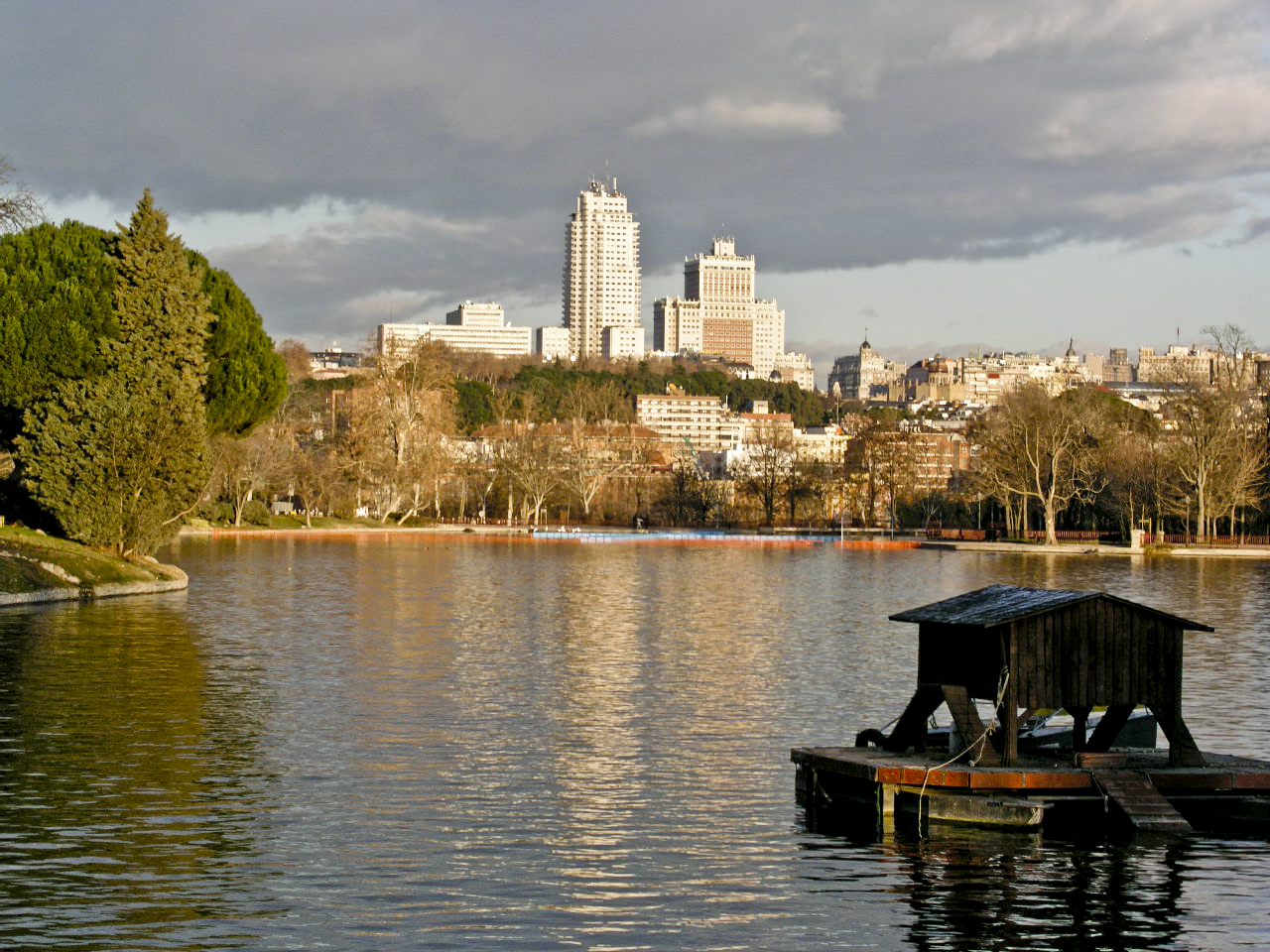
Madrid's largest park at nearly 1,723 hectares — about five times the size of New York's Central Park — with a lake, a zoo, a cable car, and genuine forest.

Campo del Moro
English-style romantic gardens behind the Royal Palace, named for a 12th-century Moorish siege camp, with fountains and the palace's most dramatic facade view.